Make Storm Drains the Star of Your Next Stormwater Campaign

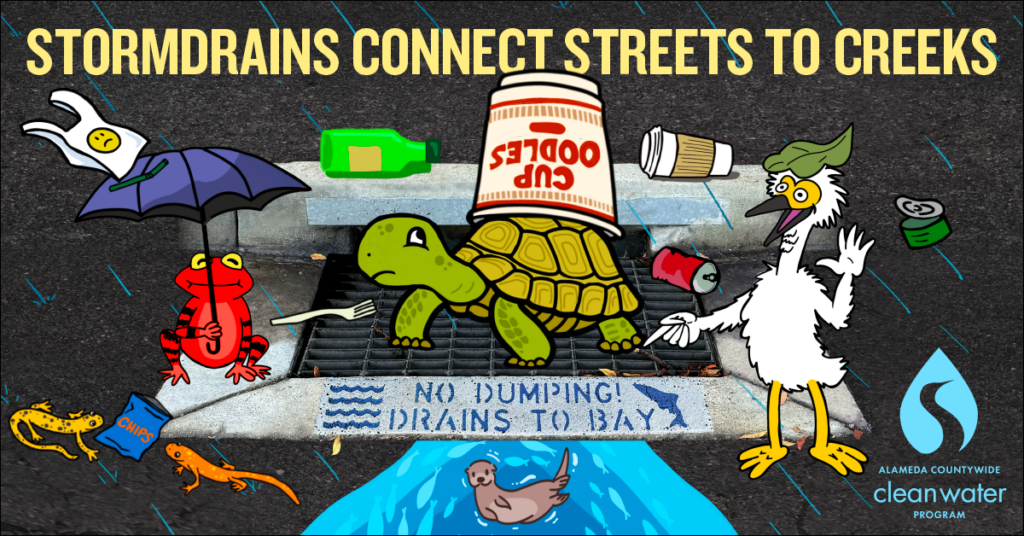
clean bay begins here with turtle and storm drain

Storm drains are everywhere, but what are they for? While our team (and maybe your team) thinks about our stormwater system A LOT, the average person doesn’t. Since 2009, Gigantic has continually evolved outreach to catch the attention of average residents to help them understand how storm drains connect to local creeks and San Francisco Bay. This understanding encourages action to prevent pollution of the stormwater that flows to our waterways. Below we share a few examples of content we’ve created that successfully engaged people online and in the real world, using storm drains as an unlikely star of the campaign.
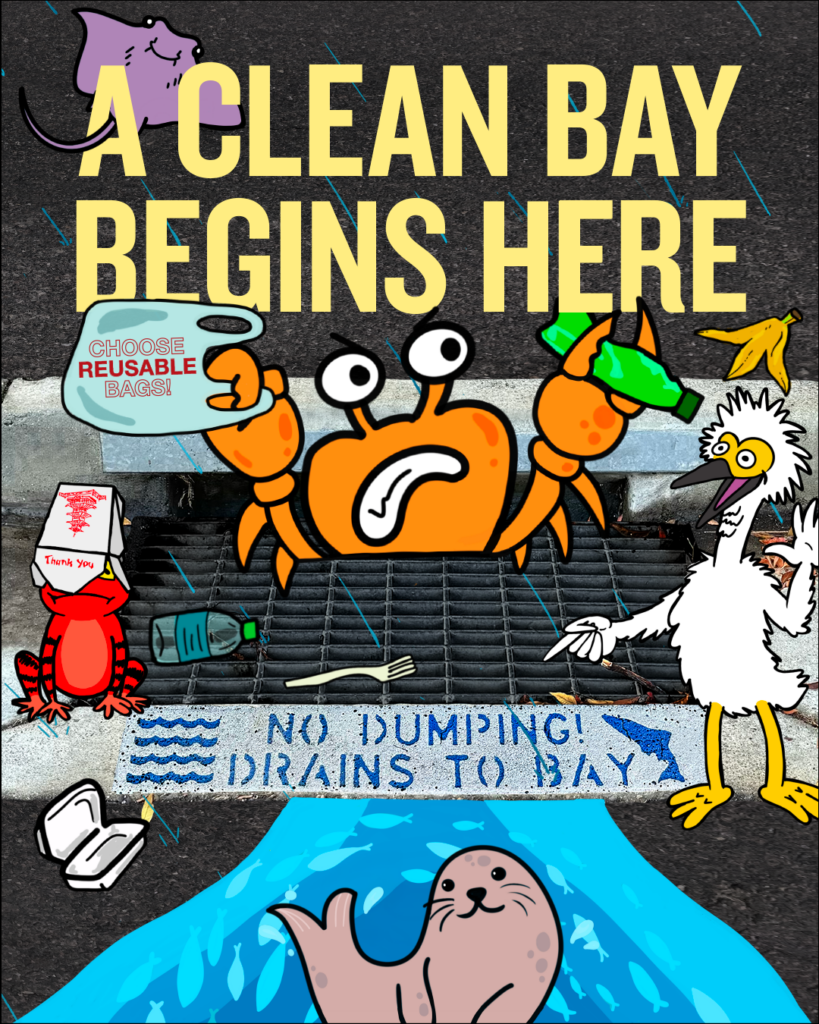
A clean bay begins here graphic with cartoon animals

This year’s “A Clean Bay Begins Here” campaign launched March 1 for the Alameda Countywide Clean Water Program. To capture attention, we partnered with Bay Area artist Joanna Sokua to raise the visibility of the county’s storm drains and send a simple message: that there is “No Dumping” on our streets, because storm drains lead directly to the Bay. Sokua has received media and social media attention for her work, such as her BARToons, which combines photos with cartoon-style illustrations and elements of humor. Our campaign uses her drawings of native wildlife—including the western pond turtle, river otter, red rock crab, California newt and harbor seal, and of course, Program mascots Fred & Izzy. “The focus of this campaign is close to my heart. I loved creating art that hopefully makes people laugh, and piques their curiosity,” Sokua says.

Ads will run on BART platforms, buses, billboards and at events. An online pledge campaign with prizes will help people take the next step: commit to taking action to prevent pollution—including picking up litter, using reusables, less-toxic gardening and proper disposal of HHW and pet waste.

county fair booth with happy attendees

Storm drains also starred in our 2025 Alameda County Fair exhibit booth, which won four blue ribbons! Visitors took a journey through the storm drain, starting on the street, and ending up in a creek. Fun View Master slides and flip signs lent an old-school hands-on approach—a big hit with both kids and adults.  Over 300 people pledged to take action!

For the Watershed Watch Campaign in Santa Clara County we’ve created short-form vertical videos (Reels/Shorts) in trending styles to show residents aspects of storm drains they don’t see, including maintenance, trash capture devices, and creek connections. Last year, our “Dirty Jobs”-style video showing a storm drain cleanout, was our most engaging content for Watershed Watch—with over 1,500 likes and dozens of comments. It was nothing fancy, just an interesting peek into the work that our clients do every day, which provided an engaging way to deliver stormwater educational messaging.

In February we launched a video on trash capture devices for Watershed Watch, which showcases the technology “hiding under our streets” that local agencies have installed to meet state goals for trash load reductions in waterways.

Also in Santa Clara County, for West Valley Stormwater Authority we created a YouTube short that shows exactly what kinds of items get stuck in the storm drain and how the Authority’s ongoing work keeps things flowing. The video has over 4,600 views and counting.

We encourage anyone doing stormwater outreach to create engaging content that lets residents take a peek inside the storm drain to see all the great work local agencies do to develop and maintain these important systems!

#  #  #

Communicating Climate Urgency Through Art

mural of Greta Thunberg in San Francisco
Greta is watching us…

At Gigantic, we understand that facts and figures are important for advancing science and for communicating about issues such as the impact of climate change. But plainly presented facts are not always ideal for inspiring action and behavior change.  Visual and performing arts can be very useful for helping people see the larger picture, grasp relationships through story and create an emotional response that will reinforce action. Two Bay Area examples show the way.

In downtown San Francisco, a 60-foot-high mural of climate activist – and TIME Person of the Year – Greta Thunberg fixes passersby in Union Square with an implacable look. The mural is a project of the nonprofit One Atmosphere and Argentine artist Cobre. Ms. Thunberg is an icon of climate resistance and the single-minded passion of young climate activists all over the world. This 16 year old has become a heroic and still very human and vulnerable face of the climate movement; the mural’s unavoidable stare serves as a prominent reminder of the need to raise climate awareness.

Also in San Francisco, the Climate Music Project seeks to “ tell the urgent story of climate change to broad and diverse audiences in a way that resonates, educates, and motivates.” A collaboration of world-class scientists and musicians, the Project supports science-guided music and visual experiences to inspire people to engage actively on the issue of climate change.

I recently saw a concert of pieces inspired by climate change data by San Francisco Conservatory of Music composition students and was impressed by the different creative approaches the students took to portray the grim statistics.

Artists around the world are grappling with how to express the enormity of the emergencies of climate and biodiversity loss. Their work can inform and enhance our outreach efforts and remind us of the importance of vivid communication in all our environmental work.

Fleurette Sevin: A Reuse Artist to Watch

Every so often we run into people doing important environmental work who deserve some recognition. This inspired us to launch a  Gigantic Q&A blog series, highlighting local citizens making a difference.

DSC_2880_WebSM

Fleurette Sevin
Recycled Glass Artist
Walnut Creek

KN: What inspires you as an artist? 
FS: I enjoy the problem solving that comes from being a reuse artist.  Sometimes I have an idea of something I want to make and go and look for materials. Other times, I will find an interesting object and think, “What can I make out of that?”

KN: How do you incorporate sustainability and green practices into your art pieces?
FS: Most importantly I try to have as much as possible—if not all—of my material be recycled. I try to stay away from toxic and harmful chemicals.  I use a sandblaster instead of etching my glass with chemicals.

KN: What is your favorite material for making new artwork and why?
FS: Glass! Most of my professional work has been in glass and that is where I have the most experience. Each bottle factory has its own formula for glass, and the ratios by which the glass expands and contracts are different. In short, you can’t melt different colored bottles together because they may crack. This challenges me to make the glass interesting in other ways. I can add texture by twisting, adding wire, sand blasting and tumbling. I use combinations of glass techniques—from flameworking with a torch to fusing, slumping and coldworking. Glass can be both a liquid and a solid.

KN: What kind of reactions do your art pieces get?
FS: Mostly positive. Quite often people cannot tell at first that the pieces are made from recycled materials. Recycled does not have to look rough or “trashy.” I hope I can inspire others to take a second look at their own trash and find creative uses for it. Some people turn away from my bullet casing jewelry because of the association with violence, which is understandable. I like to think of it as transforming an object symbolic of destruction into a thing of beauty.

KN: What would be your dream art project?
FS: I enjoy sharing ideas and collaborating with other artists. My dream project would be working with other reuse artists on bigger, public works projects.

Want to know more about Fleurette? Find her here:
http://www.flower7.com/
https://www.facebook.com/Flower7Art
https://www.etsy.com/shop/Flower7